
7 Steps to dominate B2B Customer Experience

B2C (business to consumer) organizations have been proactively managing customer experience for many years. Think of the restaurant or the retail store. You can go back more than a century for evidence of B2C outfits harnessing CX for business gain.
B2B (business to business) customer experience is a more recent phenomenon. Firms in transportation and logistics, IT services, accountancy and many others. These companies have learned lessons from their B2C brethren. But there are differences as well as similarities in best practices for each.
What is B2B Customer Experience?
B2B customer experience is the experience of B2B buyers and decision-makers as they interact with providers of B2B goods and services.
Definitions of ‘customer experience’ apply to both B2C and B2B environments.
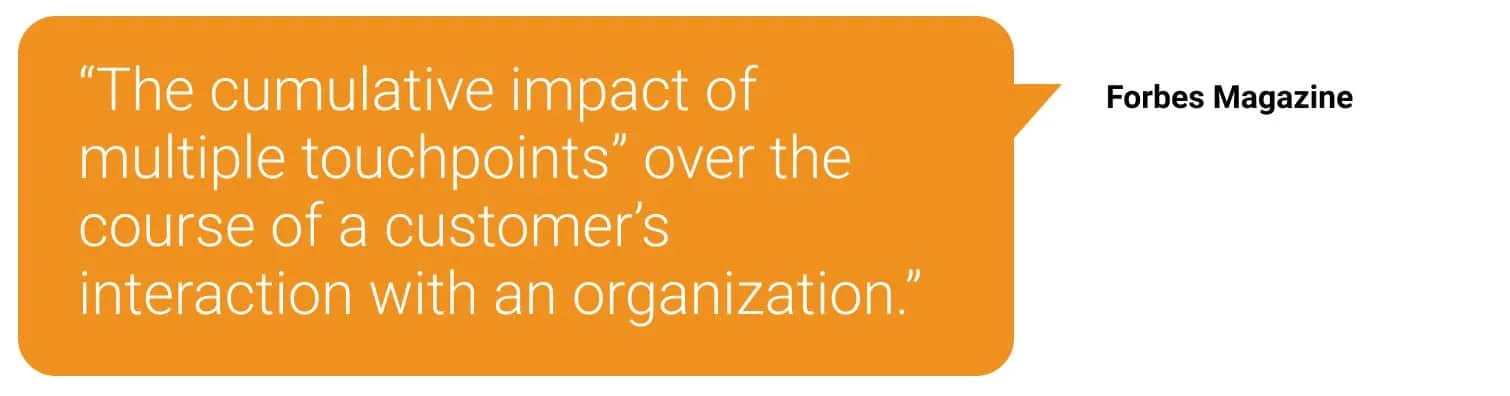
Forbes magazine describes it as
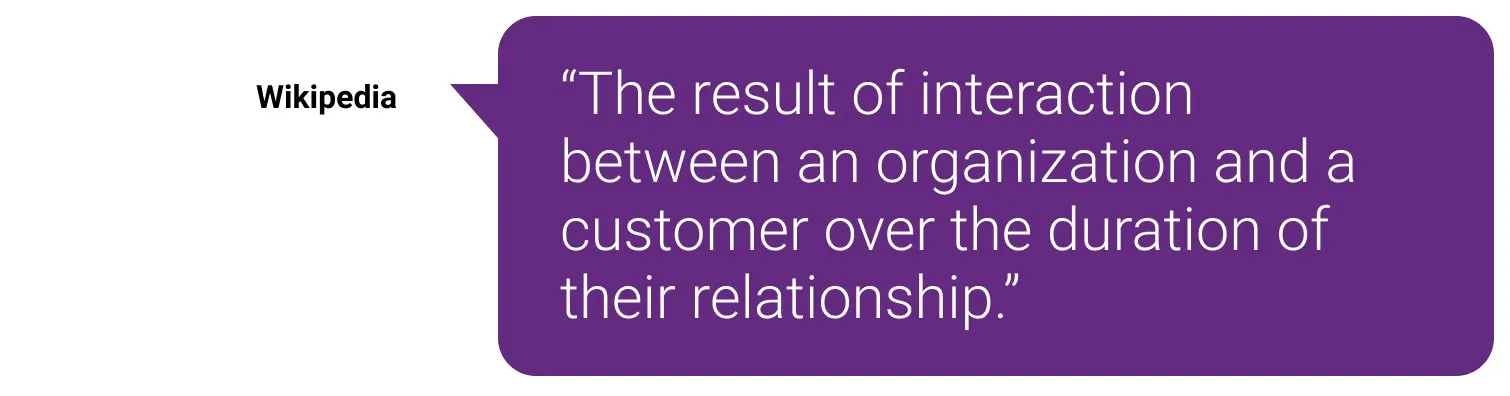
Wikipedia defines it as
We are all consumers. Naturally, that includes every single B2B customer decision-maker. What’s become apparent over time is that consumer experiences affect the expectations we have as B2B buyers.
B2B customers now expect the same high levels of service, personalization and transaction simplicity that they experience as consumers.
Difference between B2C and B2B Customer Experience?
Customer experience encompasses everything from the first point in time that a prospective customer becomes aware of a brand. B2C enterprises can touch a very large number of individual consumers through mass marketing. In contrast, B2B organizations will generally be more targeted and selective in their marketing.
Another key difference is the sales cycle. For B2C vendors, sales cycles can be very short/fast. These are accelerated further by digital touchpoints. Prospects will often quickly progress toward making a purchase. Good B2C CX design supports rapid decision making and ease of transaction with online purchasing, supplementary information and services; even comparisons, reviews and advice. In B2B contexts, the sales cycles can be much longer. The ultimate purchasing decision may not be made by one person and often requires various stages of appraisal and evaluation before final approval.
In B2C the decision-maker and the user are typically the same people. The obvious exception is with gifts. This explains why B2C companies go to great efforts to optimize returns processes.
Finally, the amount of time and money available to spend on individual customer relationships is significantly greater in B2B than B2C. For example, B2B enterprises often employ account managers to look after customer relationships. This model cannot scale in B2C, with some extreme exceptions. And while B2C-customer ratios are typically “one to many”, the B2B-customer ratio is more likely to be “one-to-few”. This allows for greater personalization in dealing with unique customer needs. Despite this, the B2B experience can ‘feel’ distinctly inferior to a good B2C experience.
It’s clear that B2B customer experience must contend with many aspects of the customer relationship and customer behaviour that don’t exist in B2C.
Importance of Customer Experience
B2B customer experience is big business and is set to get much bigger. The customer experience management market is projected to grow to $14.9 billion by 2025.
According to a Salesforce study, 80% of customers say the experience a company provides is just as important as its products or services.
Back in 2015 just 3% of B2B businesses said they valued CX as an integral part of company culture. Jump forward to today and at least 86% of companies consider it very important. The same proportion of B2B buyers (86%) are willing to pay more for a great customer experience. That’s more of their organization’s money, remember. Even when professionally responsible for seeking value for money, CX is being prioritized.
B2B clients increasingly want the same transactional ease that’s provided for consumers, including omnichannel facilities. These enable them to find the information they seek and interact across all channels, including social media. LinkedIn found that three-quarters of B2B buyers are ‘significantly influenced’ by social media. A whopping 84% of senior executives use social media to support purchase decisions.
Clearly, B2C experiences are setting the standard which needs to be met by B2B. B2B clients want the same transactional ease that’s provided for B2C customers but B2B buyers also want omni-channel facilities that enable them to find the information they seek and interact across all channels. B2B organizations that are able to support this demand and integrate omni-channel capabilities with their legacy systems and practices will have a competitive advantage.
An important aspect of B2C customer experience is personalization and this applies equally to B2B. B2B personalization involves tailoring all aspects of business advertising, marketing, sales-offers and communications to meet the specific needs of each individual B2B customer. It requires a deep understanding of business customers, their needs, expectations and business goals – in order to deliver experiences that go beyond what they expect.
7 Steps to excel in B2B Customer Experience
Customer experience is clearly vitally important for B2B organizations. So what can B2B businesses do to improve CX? Here are some top-level, best practice guidelines.
Develop Customer Insight
Business buyers are often under a lot of pressure. They have budgetary responsibilities. Buying decisions will be judged by their peers, colleagues and managers. This pressure can lead to anxiety and stress.
B2B organizations can address this by getting to know individual customers better. Specifically the requirements that they must meet such as deadlines and internal processes. Developing valuable customer insight for each and every business customer underpins the delivery of great customer experience.

Foster a Customer-Centric Culture
Developing a customer-centric culture means putting the customer at the center of everything. This should begin with a root-and-branch appraisal of the customer journey. Construct a customer journey map to identify every customer touchpoint. Look for sources of friction and delay, and remove them. Pinpoint opportunities to add value and even spread some magic touches. You can be just as creative in B2B as the B2C guys to drive customer satisfaction and loyalty.
B2B businesses often have a sales-oriented heritage, so shifting to a customer-centric paradigm can be challenging. Educate and communicate with your people to move the whole organization in a customer-centric direction.

Deliver Personalized B2B Experiences
B2B customers should be treated as individuals with specific needs and desires. Delivering personalized services to B2B clients adds value for both the client and you. Customers need to recognize that they are valued and their requirements understood. Getting to know B2B client organizations better enables you to tailor offers. Also, their preferences for when and in what format to receive relevant information.
Make Full Use of Technology
B2B companies need to be fully aware of the digital channels and touchpoints available to them. Many will be the preferred channels of communication for customers and prospects, though not the same for everyone.
New technologies are developed at a great pace so it’s important to remain abreast of these. Novel inventions rapidly become mainstream. We’ve seen this with social media and chatbots in particular.
You should also be examining opportunities around data analytics. For example, using historic customer data to derive personalized recommendations. Emerging technologies like augmented reality and artificial intelligence are already being used to improve CX.
Deliver Outstanding Customer Service
The goal of great customer service is to continuously improve customer satisfaction. You can’t afford to rest on your laurels. Customer service revolves around answering queries throughout the customer journey. However, most B2C customer service enquiries occur post-purchase. For example, in response to an issue, they’ve encountered. That’s just not the case in the B2B world. Plus, B2B customer lifecycles tend to be more cyclical rather than linear. This calls for different service strategies and metrics that constantly monitor customer satisfaction.

Derive Continuous Feedback
It’s important to facilitate customer feedback throughout the B2B customer journey. This ensures that valuable clients are not encountering unwanted hurdles or roadblocks. Feedback needs to be continuous because everything is always changing. New products and services, new contexts and requirements. Collecting feedback highlights what’s working and what isn’t. What’s liked and disliked. The purpose of collecting this feedback is to act upon it swiftly and appropriately.
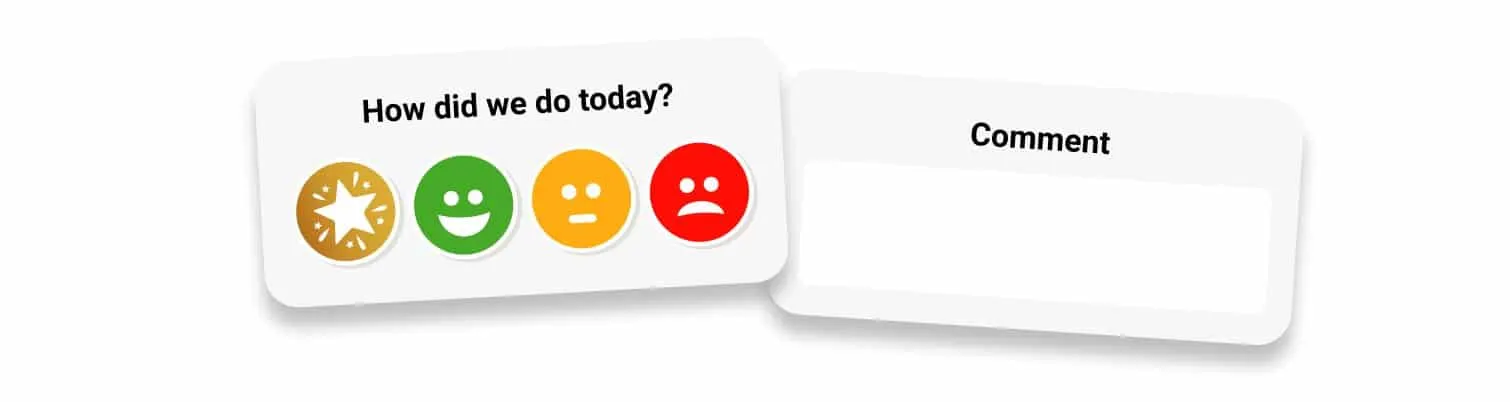
An effective technique is to carry out quick customer experience surveys. Don’t expect B2B buyers to complete lengthy, detailed questionnaires. Assume they have practically no spare time for anything. Aim for simple 1-click surveys with just one or two relevant, engaging questions. Choose touchpoints to use as opportunities to ask questions in a timely manner to gather immediate, in-the-moment responses. Keeping these surveys short and succinct will elicit the best response rates too!
Act on feedback
The term ‘customer experience’ applies at least as much for B2B and B2C. It’s a growth area attracting lots of investment, but not all investments are worthwhile. Our advice is to gather insights and intelligence at an individual level – and act upon them to make changes large and small. Some organizations have been slow to the fact that B2B customer expectations are being shaped by B2C experiences. All should recognise that their future success rests on delivering an excellent B2B customer experience.

Start measuring Customer Experience
Give Customer Thermometer a try and find out how your B2B customers feel. Our free trial should give you plenty of opportunities to experiment with fast, effective feedback surveys. We integrate with practically every platform and generate some of the best response rates in the business. Simply fill out the form below.
Your name *
Your company *
Your email address *
Your password *
Comments