
Customer Attrition: 10 Reasons Why Your Customers Leave

Why do customers leave? There are lots of reasons behind customer churn, but some consistently come up time and again.
It’s important to know why customers are likely to leave so that you can:
- Prevent such circumstances from arising
- Change whatever it is that customers don’t like
- Do more of what customers appreciate and value
10 Reasons for Customer Attrition
Some of the reasons are unavoidable. In other words, they dictate that some customers will leave no matter what you do. But for the most part, these insights into the reasons customers leave should equip you to take action to stop it happening.
The customer’s expectations were not met
This is the big one. Failing to meet expectations covers a very broad number of specific reasons. In many instances, it’s the organization failing to live up to expectations the customer has before they experience the product or service. And when the experience happens, it’s a disappointment. Better understanding this reason should be the beginning of working out what could have been done to stop it happening. Maybe the organization overinflated its claims in marketing material, for example.
All customers build a view about the problem your product or service is supposed to help them fix. If you fail, the customer loses faith in you. The reason for leaving might be that you failed at the first hurdle by not achieving the outcome they wanted. Or it could be that you used to achieve it, but not recently. This is where the failure of expectations amasses over time rather than at first contact.
Customers can often be very patient, giving the organization plenty of chances to improve before finally giving up. Some examples of failed expectations are down to short-term or even momentary lapses in performance e.g. lack of availability/choice, or inconsistent quality.

Someone was rude to the customer
A more elegant way of expressing this reason could be “poor customer service”. And that’s fine, but the reality of most leaving incidents is that the customer had a bad experience dealing with an employee. It could be very obvious if the customer was shouted at or blatantly disrespected. But much harder if the customer’s perception is that insufficient care or courtesy was afforded to them, especially if the employee says they tried their hardest. According to the US Chamber of Commerce, 68% of customers leave because they’re upset with the treatment they’ve received.
Often a customer will gain the impression of not feeling valued. And this will accumulate over a period of time, rather than as the result of a specific interaction. Organizations that favor bigger or newer customers over smaller or older ones can find some will leave because they are underappreciated.
Organizations can guard against this by treating customers equitably and enshrining a more customer-centric culture. Magic touches and the occasional sparkle of star treatment can also work wonders.
You broke a promise to the customer
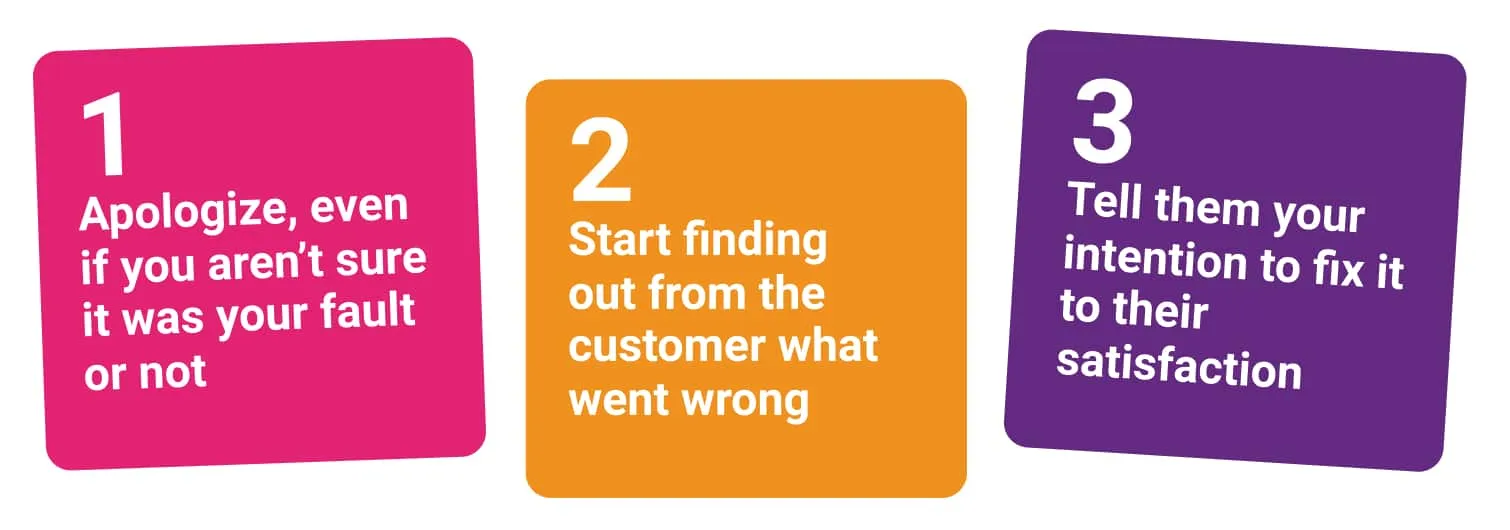
If something is going to make a customer think, “enough is enough” it will be a broken promise. This often crops up in customer support situations, such as if the customer has been told something will happen at a certain time but doesn’t. Such situations can be very emotive, even as far as the customer believing they have been lied to.
It’s important to remember that customers only ask for support when they need it. They’re already feeling negative for that very reason, so what happens next is doubly important. Long wait times and poor response times, or just failing to fix the problem are all catalysts for leaving – especially when the customer feels this constitutes a broken promise.
As with all these examples, broken promises can be blatant or subtle. At the subtler end of the spectrum the broken promise is simply a matter of perceptions. If the customer was convinced they would experience X but they ended up experiencing Y, it feels disappointing and that can be enough of a reason to leave.
The customer is struck by “buyer’s remorse”
Much of why customers make decisions is to do with human psychology that organizations find difficult to understand. One manifestation of this is “buyer’s remorse”.
Buyer’s remorse is the feeling of regret customers can experience after making a purchase. This regret can be significant if the decision involved choosing between alternatives and/or if it was a big investment. The remorse is often irrational and short-lived; the correct decision was made, it’s just that the customer is finding it hard forgetting about the opportunities costs associated with that decision. Also, how the alternatives may have worked out.
However, buyer’s remorse can influence the customer leaving if they aren’t made to feel sufficiently comfortable in their purchase, and if negative consequences emerge early in the customer experience/relationship.
The customer has no reason to remain loyal
Customer loyalty is a very intangible thing. Customers will often decide against leaving if they have some sense of loyalty to a certain brand, product, service or organization. Loyalty typically takes some time to accrue, so organizations find it hard to detect or create loyalty among new customers in particular.
Loyalty is best understood as a spectrum, with strong feelings of loyalty at one end and low or non-existent loyalty at the other. Some of the things influencing where customers sit on that spectrum in relation to a specific brand include:
- How much the customer understands about the product/brand
- The customer’s experience of using it
- The overall number of times the customer has used it
- The current frequency of buying or using it
- The convenience of buying or using it
- The prestige of using it
- Incentives/rewards for continuing to use it
- Shared values with the brand
The customer is tempted away by a more attractive competitor
When customers leave, where do they go? Assuming they still have the need for the product or service, they go get it someplace else. In a competitive environment, organizations must be conscious of what the competition is doing and ensure they are not at a disadvantage on aspects such as quality, availability, price, etc. In this way, they can neutralize a primary reason for the customer leaving.
Sometimes competition can be extremely disruptive and offer existing customers compelling reasons to actively leave your organization. Establishing loyalty with customers, and having a good customer retention strategy are essential before such an eventuality arises.
The customer has died, moved location or otherwise just doesn’t need your product or service any more
For the sake of completeness, let’s not overlook that customers leave for reasons that don’t have anything to do with you.
- Deceased customers will account for a certain level of churn, and this can be higher if your customer demographics are at the senior end of the population age distribution.
- Organizations serving local populations may find they need to attract new customers to keep pace with housing turnover. In some instances, where population is increasing overall, any customers who’ve left can be easily replaced by more coming into the area.
- Sometimes your product or service just isn’t needed by the customer anymore. For example, daycare facilities (the kids are grown up) and pest exterminators (the last treatment cleared the infestation for good).
The customer doesn’t see the value in what you offer
Customers have got to be gaining value from their purchases or they won’t keep making them. Value is in the eye of the beholder, and it’s different according to each customer’s perspective. If any of the following is happening then value could be diminishing
- The differentiated USPs that used to make your product/service market-leading now feature in competitor offerings. You aren’t innovating.
- Your pricing hasn’t kept up with changing market dynamics. You could be too expensive, or potentially even too cheap.
- The way your product or service is consumed hasn’t moved with the times. Alternatives are easier to get hold of, take less commitment and are more flexible.
- Your reputation isn’t what it used to be, making you less fashionable, relevant and trusted. Customers may also have less faith that you’ll be able to give help if they need it.
- It isn’t clear what your brand stands for, making long-term customers feel disconnected from it and new customers disinterested.
You aren’t communicating how the customer wants
Relationships are built on communications. Being able to communicate with customers – and facilitate them communicating with you – is critical to a strong customer relationship.
Some customers leave because they’re kept in the dark and not updated on important events. This is particularly pronounced in B2B customer relationships with the dynamic (supposedly) being more of a co-reliant partnership.
In other situations, things fall down when customers’ communications preferences aren’t taken into account. Or the organization is unable to communicate consistently across its various channels (email, chat, phone, social, etc.). These can make dealing with you feel too much like hard work. Customers want an effortless experience and seek out suppliers who are easy to do business with.
The customer is a bad fit for your product/service
When it’s not right, it’s not right. The diabetic who put Ben & Jerry’s in their shopping cart. The environmental activist who bought a Humvee. It could be an honest mistake. They may have been sold on bad information. Sooner or later, they won’t be a customer any more.
Some organizations create this problem themselves by proactively targeting the wrong customers. For example, ‘family oriented’ hotel chains that see an opportunity with business travelers but don’t offer the facilities to suit. This is doubly bad because it pits customer retention efforts against customer acquisition efforts – an almighty waste of time and money.
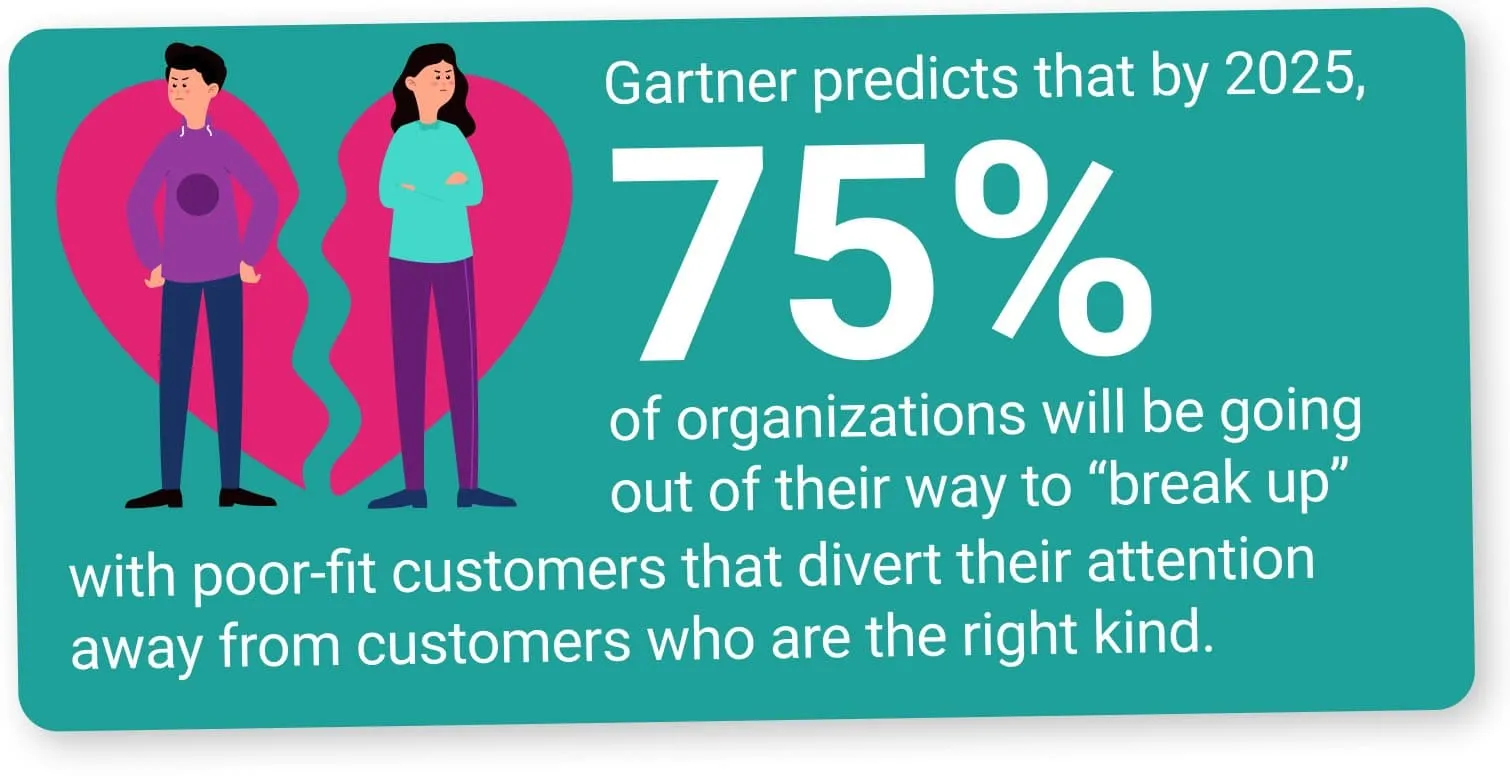
Not every customer is a good fit for your product or service. It’s just as well to acknowledge and understand that. In fact, Gartner predicts that by 2025, 75% of organizations will be going out of their way to “break up” with poor-fit customers that divert their attention away from customers who are the right kind.
How to stop customer attrition?
Customer feedback is a vital weapon in understanding the reasons customers leave. Asking for feedback helps identify which customers need something different from you, before it’s too late.
Customer feedback is also central to generating the business KPIs that inform customer retention, such as CSAT and NPS. The key is getting maximum feedback so you have the most possible, and most up-to-date, data to work from.
Customer Thermometer helps stop customers from leaving with a market-leading 1-click feedback survey tool. Try it out and see what you can achieve with a free 2-week trial account.
Your name *
Your company *
Your email address *
Your password *
Comments