
What makes a great customer service experience?

Customer service is a critical part of the way organizations engage with their customers. Customers’ experience of that is commonly what these businesses are judged on and compared against.
This guide examines the concept of customer service experience, why it’s important and what separates the excellent from the mediocre.
What is customer service experience?
Customer service experience is what customers take away from the cumulative total of interactions with a company’s customer service organization. It’s the impression gained by experiencing, first hand, a brand’s customer service delivery.
Understanding customer service experience comes from gaining insight into what customers think about their experience of customer service. Specifically:
- The knowledge and skills of customer service representatives
- The timeliness, efficiency and effectiveness of customer service
- How the customer is treated in terms of personalized service, courtesy and respect
- The effort required to engage with customer service
- The value and tangible outcomes generated by customer service engagements
- Any unexpected or surprising benefits that positively impact the customer experience
- How these factors stack up against each customer’s expectations
- The perceived quality of customer service compared to competitors
Customer service experience is no longer a ring-fenced management consideration, but a companywide concern. Organizations can’t just lay it on their customer contact centres and tech/product support teams to optimize and improve. In modern business practice, customer service is delivered by anyone that engages with a customer.
Why is customer service experience important?
Experience is perception, and perception – as far as the customer is concerned – is reality. This makes customer service experience a crucial deciding factor in customer retention and customer acquisition alike.
Here are 9 reasons why customer service experience is so important:
Prevent customer churn
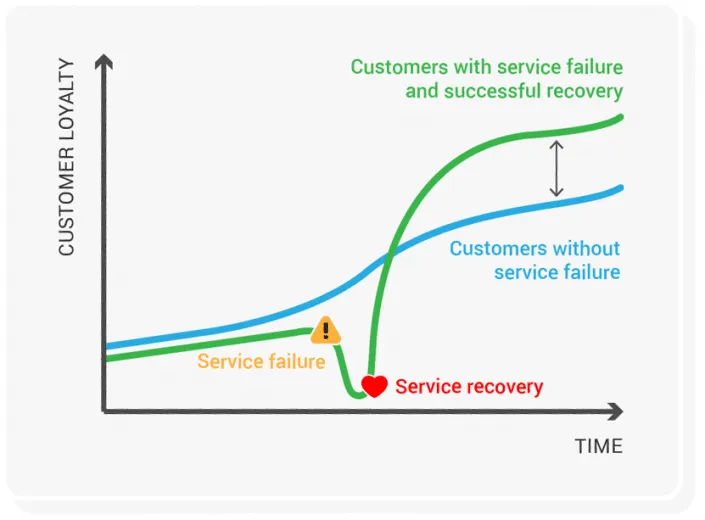
A bad customer service experience seldom ends well. Sure, you can recover (and even benefit from the service recovery paradox), but a better policy is doing everything you can to stop issues arising in the first place. Why? Because customers leave when they don’t like the customer service experience you provided.
Mitigate refunds, returns and dispute costs
Good customer service can soothe customer issues, mitigating the risks and costs associated with returned items, refunds and managing disputes.
Achieve more predictable growth
Good customer service experience brings stability, bad customer service experience brings chaos. With fewer customers exiting because they dislike your customer service approach, your growth plans no longer have to contend with the ‘leaky bucket’ effect of customer retention.

Protect your reputation
We’ve all seen bad customer service experiences go viral, to devastating effect. At the very least, one person will tell many more people about a bad customer service experience than a good one. You don’t want a reputation for giving bad service – especially on trusted third-party review sites and social media.
Increase customer trust
People typically engage with customer service when they need something. They could be ‘in crisis’, highly stressed or even vulnerable. Knowing you’ve got their back and can help when needed inspires tremendous customer trust. They’ll be more positively predisposed to marketing and upsell/cross-sell opportunities. Plus they could be more forgiving if something does go wrong in the future.
Optimize customer success metrics
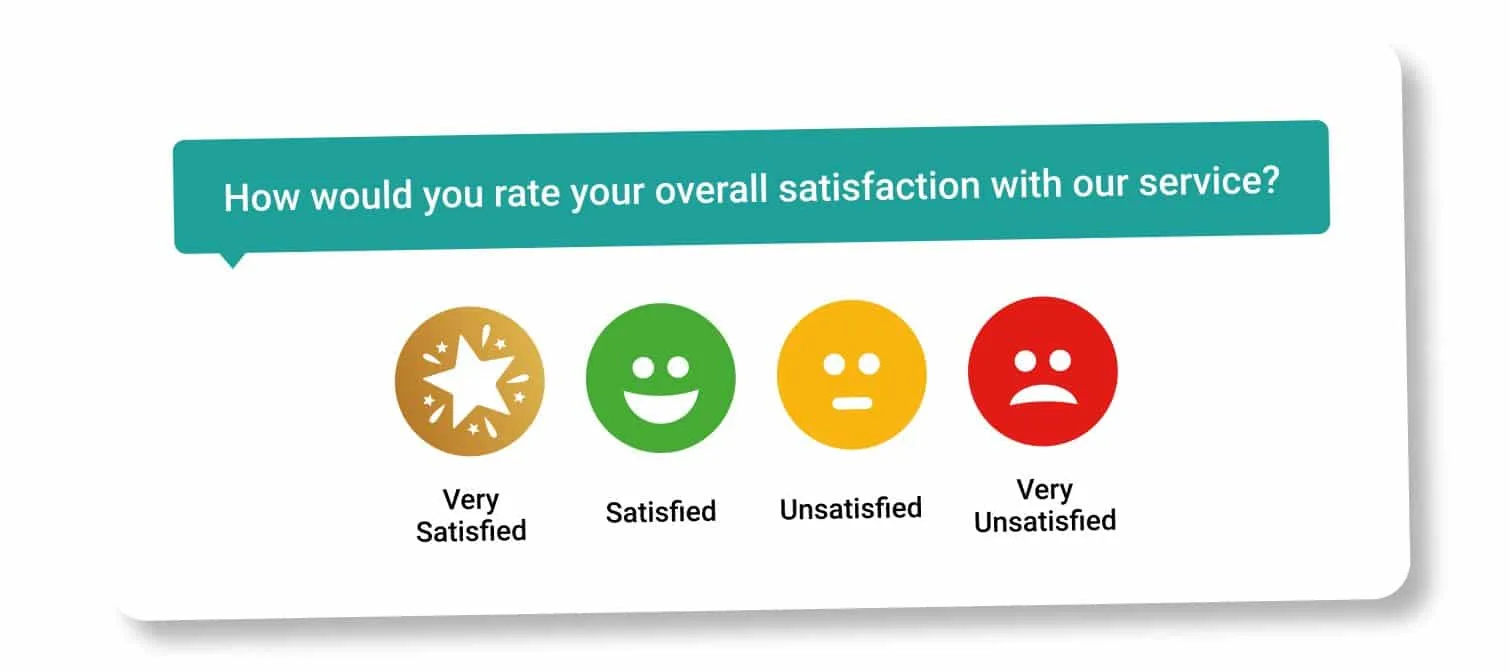
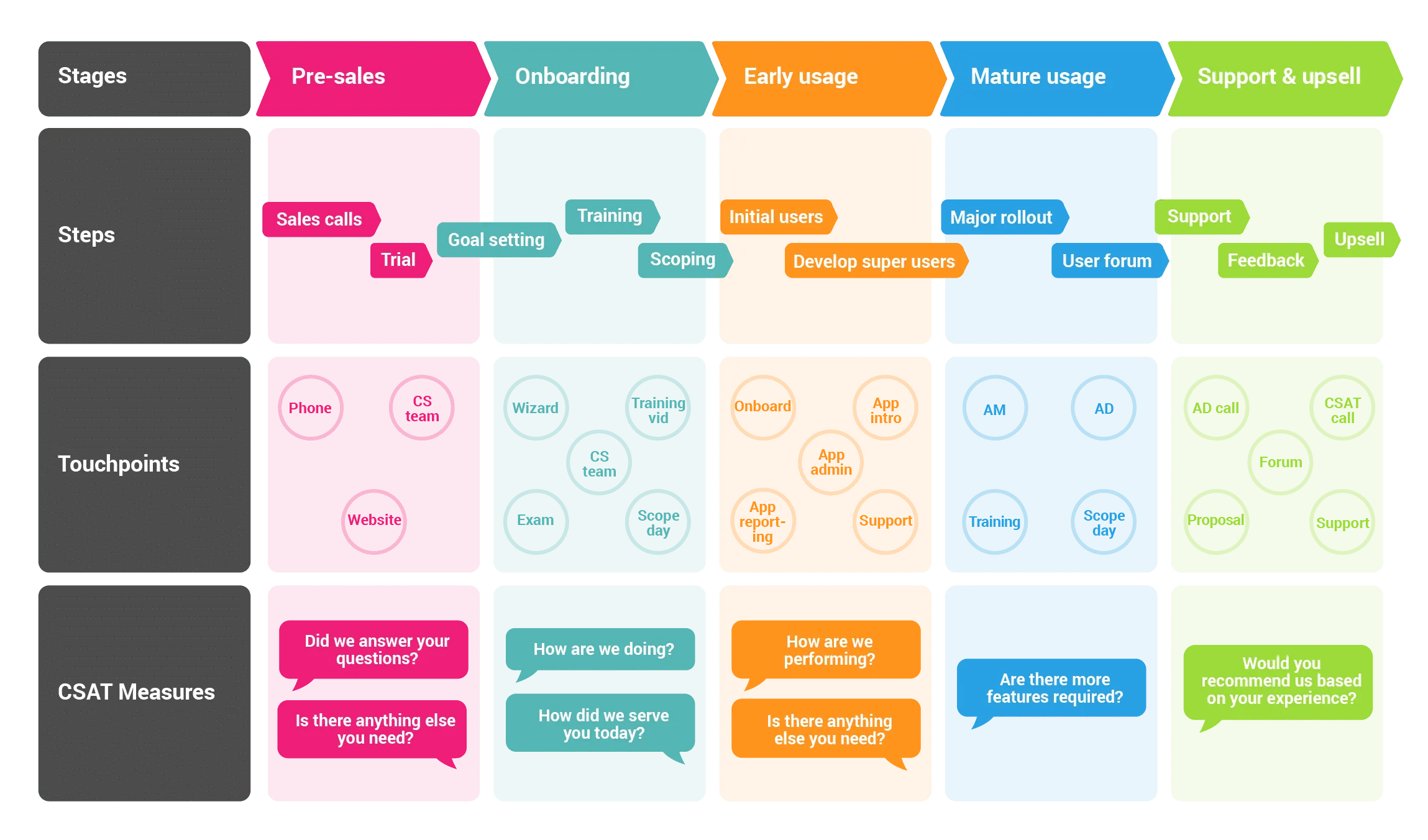
Customer success metrics like CSAT and NPS are very important to organizations. They support sales and marketing activity and can even increase shareholder value. Better customer service experiences come through in how customers respond to questions like “would you recommend us” and “how satisfied are you”.
Develop new products and service with confidence
Customer service agents play a crucial role in interacting with and understanding customers. This is vitally important when new products and services go live. When an organization evidences that its customer service function is doing a great job, product and service development can go into overdrive. Safe in the knowledge that any teething problems can be dealt with optimally.
Validate your HR approach
Are you hiring the right people? And are you providing adequate training support to develop skills and knowledge? Keeping an eye on customer service experience feedback will give you plenty of insight and, hopefully, validation that all’s well with your current approach.
Reinforce customer-centricity
Customer service is a team game, and a top objective should be keeping your team informed and motivated. Awareness of customer service experience reinforces your commitment to customer-centricity. And if you can share learnings and successes together across the business, you’ll make the right improvements to keep on progressing.
What makes a great customer service experience?
A great customer service experience is built on strong foundations. With these in place, organizations can be more creative in how to stand out from competitors and make truly memorable customer service experiences. Here are the 11 things we think make for a great customer service experience.
Responding quickly
You’ve got to be as close to instant as possible with response times. That starts the moment the customer decides to contact you, not when they actually get in touch. Address wait times and the annoyances of being put on hold, waiting in line or it taking too long to get a reply.
Top tip: Set SLAs for response times.
Engaging the way customers want
There are so many ways to communicate, organizations can sometimes struggle to keep up. All that matters is having the communications channels your customers prefer. Be beyond a multichannel strategy to an omnichannel one, where customers get the same great service experience however they do it.
Top tip: Gather customer feedback on the channels your customers prefer and act on it.
Being emotionally intelligent
Some of the most valuable customer service skills are soft skills like listening, showing empathy and expressing kindness. With so much automation creeping into customer service interactions, you can’t afford to lose sight of human emotional intelligence.
Top tip: Include soft skills in training for all staff, not just customer service roles.
Listening to what customers tell you
Customer feedback is everything when trying to understand and optimize customer service experience. Show customers you care by taking an interest in their opinion, and making improvements based on what they say. It’s a win-win for everyone.
Top tip: Develop a customer feedback program that tracks customer service experience and the factors influencing it
Making it effortless
The customer service experience shouldn’t be a chore. The less effort the better; the truly great customer service experiences are practically no effort at all. This can often manifest in increased self-service options.
Top tip: Conduct a customer journey mapping exercise to identify areas where you can minimize effort in the customer service experience.
Knowledgeable agents with the power to break the mold
Your people are one of your greatest assets; probably the greatest when it comes to the customer service experience. Invest in their knowledge, be sure to motivate and reward them appropriately. But also empower them to make autonomous decisions when customer happiness is at stake.
Top tip: Enable each individual staff member with a discretionary budget they can use to the benefit of customers.
Coming up with ‘magic touches’
Magic touches are those extra things that enrich the customer service experience and make it memorable. These don’t have to be expensive or complicated. Typically they are just thoughtful and kind. Magic touches are what delight customers, and they’re particularly impactful when they aren’t expected. Be creative and impulsive – it might make all the difference to a customer and do wonders for your word of mouth.
Top tip: Gather employee feedback to help ideate ‘magic touches’ you can use with customers to make your customer service experience stand out.
Ministry-of-magicMinistry-of-magic
5 examples of great customer service experience
Sainsbury’s giraffe bread
UK supermarket giant Sainsbury’s took customer listening to a new level when it received a letter from 3-year-old, Lily Robinson. Lily pointed out that the store’s popular ‘Tiger bread’, which sells thousands of units a day, would be better named ‘Giraffe bread’ on account of its distinctive pattern.
That earned Lily a gift voucher and a very cool reply letter. Best of all, Sainsbury’s duly renamed its product owing to Lily’s very sensible suggestion.
The story went viral, producing huge quantities of positive PR for the brand.
Magic Castle Hotel popsicle hotline
The Magic Castle hotel in LA appears on the outside to be a fairly unexceptional, mid-budget location for staying away on vacation. But it boasts some of the highest customer satisfaction ratings anywhere in the country. Why? Because of the memorable, unforgettable nature of its customer service experience.
Prominent among numerous magic touches the hotel lays on for its guests is the ‘popsicle hotline’, a poolside telephone which, when you lift the receiver, puts you through to a hotel employee who asks what flavor popsicles you’d like. These are then brought to you on a silver platter, free of charge!

Starbucks and the ‘Cheers’ effect
‘Cheers’ was the long-running sitcom set in a Boston bar, starring Ted Danson, Shelley Long and Kirstie Alley. Famously it was the place “where everybody knows your name”.
Starbucks have been vying for the same customer service experience by encouraging their café baristas to memorize the names of regular customers and their drinks choices.
It’s a great example of how personalization doesn’t always have to be a hi-tech endeavor. It also benefits Starbucks greatly, allowing it to become more embedded in local communities rather than seen as a corporate monolith.
Zappos employee empowerment
E-commerce company Zappos has a great reputation for customer service, but it’s the way they’ve gone about achieving this that’s really instructive.
Zappos succeeds in living by its brand promise “Our vow is to wow” by empowering its employees to step outside the box and help customers in ways they might never have thought possible. In this example, Zappos fixed a customer problem they didn’t cause, but had the opportunity to help solve.
Virgin’s culture of Yes
Customers respond positively to an ‘anything’s possible’, can-do customer service attitude. And Virgin Hotels exemplifies this perfectly with its YES button on the dial pad of every in-room phone. Press it and the employee who answers is primed to help with whatever you need. CEO Raul Leal explains:
“I decided to design our phones this way after a frustrating stay at a competing hotel brand. One of the things that bugged me was that the phone in my room had nine—literally nine—different icons: to call housekeeping, valet, bellman, doorman. As a guest, I just wanted one button. So that one button is all we have now at Virgin Hotels.”
5 common mistakes companies make when delivering customer service
Getting customer service right starts with seeing things from the customers’ perspective. We are all customers of one kind or another. What do we expect? What do we think is valuable in customer service delivery? How would we like to be treated? These perceptions can be supplemented by what you can find out through customer feedback.
Sometimes it goes wrong, or isn’t planned correctly. Aside from the predictable issues of being rude to customers or doing a bad job addressing their issues, here are 5 common mistakes companies make.
Asking customers to repeat themselves
We’ve all been there. Whether or not the customer has instigated contact, they necessarily encounter several different people at the organization. And each time they do, they have to restate facts and re-ask questions. This effectively turns the tables on the customer service interaction from one where the organization is managing the customer’s experience to the other way around.
Top tip: Establish CRM and collaboration tools, and quick handover protocols between staff, that prevent customers having to repeat themselves unnecessarily.
Being problem-oriented rather than solution-oriented
As Abraham Maslow said, “when all you have is a hammer, everything looks like a nail”. What this means for customer service experience is that answering customer queries should be more than just a procedure. A customer’s question may be merely representative of a wider goal, and if you fail to understand that then you miss out on making a bigger difference to them. Competitors who are more solution-oriented in their customer service approach will find it easier to attract customers away from you.
Top tip: Coach staff to understand the bigger picture when dealing with customers, not just zero-in on the specific question they ask.
Not delivering on your promises
Customer service experiences all relate to what expectations each customer comes with. When you promise something, you add to those expectations. Customer feedback is crucial in understanding expectations, how they change and how they apply to individual customers as well as collectively. But whatever you do, deliver on your promises. Anything less and customers feel betrayed and lose trust. As a result they can rapidly churn and tell others about their negative experience – tarnishing your reputation.
Top tip: Draft and agree a shared set of company values reflecting the integrity and importance of keeping the promises made to customers.
Being inconsistent
What’s the point in having standards in place to guardrail customer service experience if you can’t deliver it consistently? KPIs are essential to ensure consistent delivery so that all customers benefit rather than a random distribution. That means the same great customer service experience in store A and branch B. The same great customer service experience from agent X or operator Y. Consistency of customer service experience should also be enforced across all communications channels too.
Top tip: Report on customer service KPIs in real-time and plot improvement opportunities at least monthly.
Failing to get it right first time
Responding fast is good, but not so good if your haste causes mistakes. Customers need to know they are in safe hands with people they can trust. Put some structure into your customer service operations so that you’re being efficient as well as effective. And if you do get it wrong, own up to it straight away, apologize and apply the learnings across your business.
Top tip: Consider using average resolution time (ART, or MTTR) as a customer service KPI
How to measure your customer service experience
Understanding customer service experience is essential to managing and improving it. Companies often seek metrics they can benchmark and then measure against over time.
And while there isn’t a specific metric for customer service experience, there are plenty of ways of working out how well you’re doing and what customers think. Let’s start with some of the key operational metrics.
Customer churn rate (CCR)
Customer churn rate is the percentage of your customer base you’re losing through attrition. In crude terms, a high or increasing CCR will indicate there are underlying problems that prevent you from retaining customers. It’s hard to overlook customer service as a factor here, so it should always warrant further investigation.
First contact resolution (FCR)
First contact resolution is a top KPI for customer service and customer support teams. It measures how efficiently queries are dealt with on the very first customer contact. This is important because customers value it when organizations fix their problems on the first ask. It’s the sign of a business that’s attentive to customer needs and effective at addressing issues.
Average response time (ART)
Average response time is a helpful measurement for how much of the customer’s time is typically consumed dealing with their query. Like FCR, it can be both illuminating and motivational. If the ART is currently 60 minutes and the industry standard is 30 minutes, you can put in place strategies for bringing that time down, bringing in the necessary extra resources as it’s a business priority.

Now let’s look at the 3 most common customer feedback-driven metrics.
NPS: recommending your customer service experience
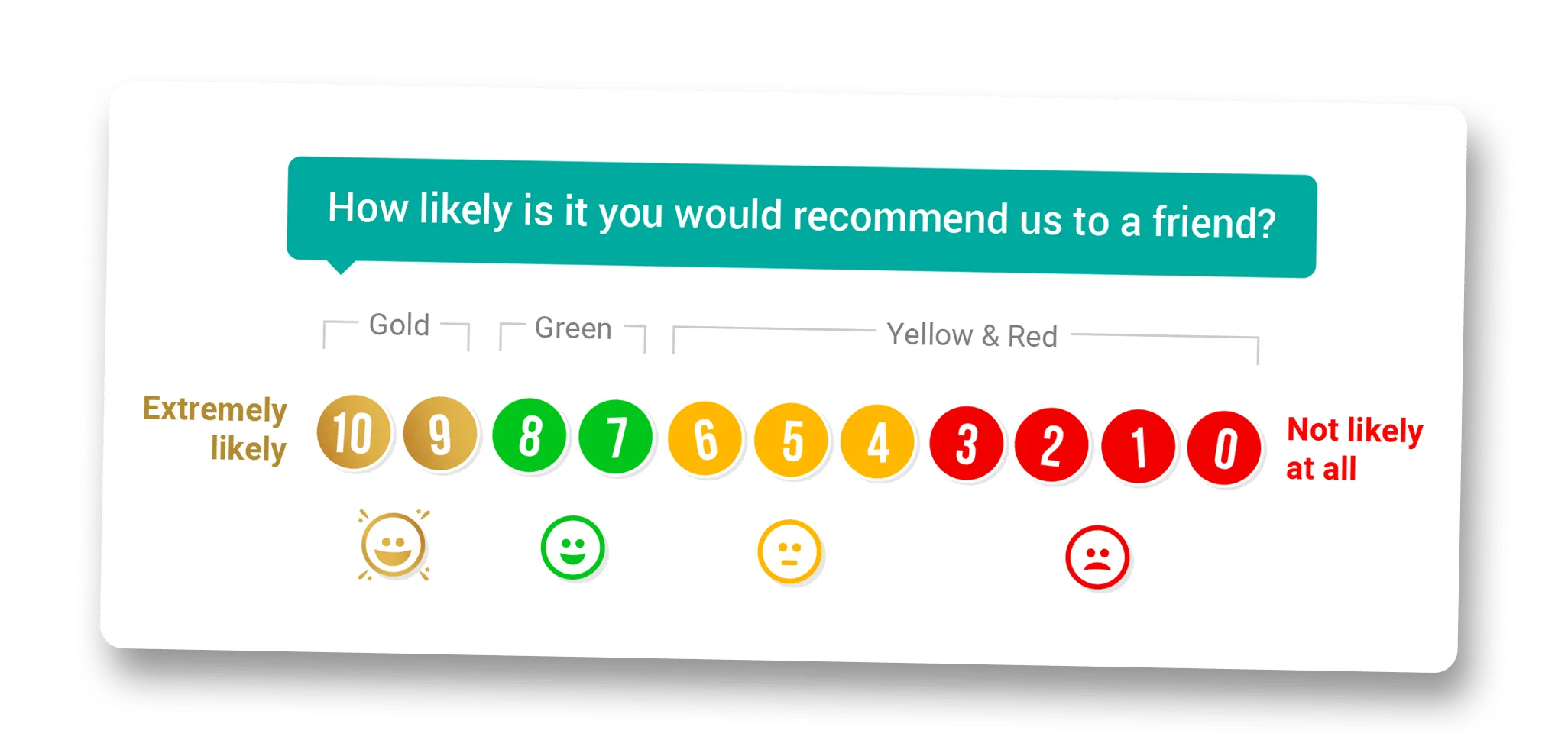
NPS® (Net Promoter Score) is a great way of deducing the loyalty effect your customer service experience is creating. It works by asking customers how likely they are – on a scale of 0–10 – to recommend your company, product or service to a friend or colleague. The rating itself will give an indication of how that customer feels, and you can track this over time. NPS comes into its own as a macro metric, allowing you to build a representative score for your customer base as a whole.
Whilst NPS is just a single question, there’s nothing stopping you closing the loop with a second, follow-up question asking why. This is absolutely critical in terms of measuring customer service experience. For example, you can ask customers what effect customer service experience (or specific aspects of it) had on their rating.
CSAT: satisfied with your customer service experience
CSAT works in much the same way as NPS, except this time you’re determining satisfaction level – a measure of the customer’s opinion and how this stacks up against expectations. The advantage of CSAT questions is that you can direct them very specifically at the customer service experience. How satisfied are they with it, and why? This is particularly useful when you’re making changes to the customer service experience, as this measurement will help validate whether the changes made a positive difference. As with NPS this is typically a single question, but you can follow up to uncover the drivers behind their responses.
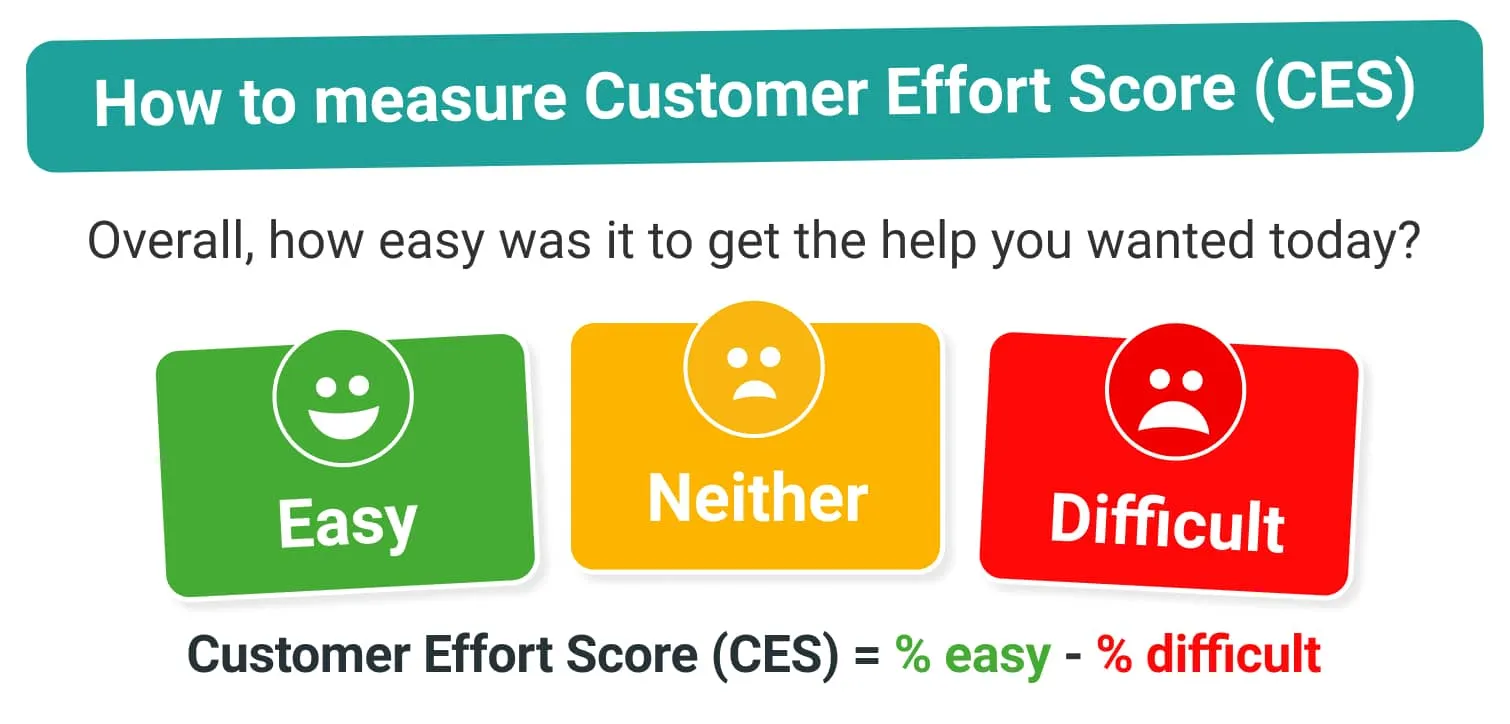
CES: the effortlessness of your customer service experience
A very important aspect of optimized customer service experience is reducing friction and making it effortless. Assume that customers are busy and expect to invest little time or effort doing the running in your relationship. With that context in mind, a CES survey question to the effect of “how much effort did it take to accomplish X” will tell you a great deal about how smooth your whole customer journey is. CES is again like NPS and CSAT in being very lightweight as a one question survey, but with the capacity for follow-up questions that get at the reasons why.
Besides these established metrics is a broader and more rudimentary way of measuring customer service experience: asking customers what they think. There are many ways of asking for and collecting customer feedback, depending on whether you seek qualitative or quantitative data. With a strong voice of the customer system in place to request, process and act upon customer feedback, you’ll have all the insight you need to tweak and optimize where necessary.
How Customer Thermometer helps create a great customer service experience
As we’ve seen throughout this guide, customer feedback has a pivotal role to play in understanding and improving customer service experience. Customers hold the key.
The fundamental requirement, therefore, is to elicit customer feedback in ways that maximize its utility. This means:
- Generating as much customer feedback as possible
- Having the flexibility to pinpoint customer intel as it applies to specific aspects of customer service experience as well as holistically
- Collating feedback data in real-time so that it truly reflects prevailing customer sentiment
- Enabling customer feedback data to be actionable
- Conducting a customer feedback program in ways that benefit rather than impede a positive customer service experience
This is where Customer Thermometer comes in, providing the platform for maximizing customer feedback response rates. We do this by:
- Enabling simple, highly engaging surveys that extend the brand experience
- Integrating with more email platforms, CRMs, service desk apps, etc than anyone else
- Facilitating literally any kind of customer feedback survey and any survey question type
- Supporting fresh, reliable customer insights via ‘instant feedback’ capabilities
- Presenting customer feedback data in a variety of live data visualizations, widgets and dashboards.